
What's in Your Dust (Thank Me Now for the Spring Clean Motivation)
What's in Your Dust (Thank Me Now for the Spring Clean Motivation)
Jump to linked products: AirDoctor · Jaspr · Dyson V15 Vacuum · iRobot Roomba Combo j7+ · Window Safety Locks · Shoe Basket · Organic Cotton Sheets · Down Comforter · Down Pillows · HVAC Filters
I would start this post with a dramatic confession about how little I dust, but it wouldn't be that dramatic. I don't know anyone other than maybe my late Grandma who dusts their house as often as they "should". I used to think it was pretty harmless, a chore that could be ignored as long as possible. Just lint, dead skin, particulates from the air like pollen, and really I have no idea what else that had settled again and would keep coming back. Less of a health issue and more of a housekeeping one. Fortunately or unfortunately, I've had to face the music.
Here's the thing: household dust isn't just dirt. It's more like a record of everything your home is slowly shedding — fibers from textiles and furniture, skin cells, tracked-in particles from outside, and, depending on what's in your home, particles and chemicals that have migrated out of everyday products over time. We're talking microplastics, volatile organic compounds (VOCs), flame retardants, phthalates, and forever chemicals (PFAs/PFOAs). And in more homes and higher concentrations than you might wish to believe.
I'm not writing this to make you feel anxious about your floors and shelves, but because I would rather know what's in my air than not. Dust is unavoidable. We aren't looking for a sterile environment, but most people don't know these chemicals are added to their home's materials, household products, furniture, and clothing in the first place. Let alone that they unfortunately don't stay put.
The good news is that you do have some control over the levels of dust and the concentrations of harmful particulates in your home's dust, and there's a satisfying range of options from the big and ambitious down to the completely free.
Why Dust Is Worth Taking Seriously (Especially With Kids)
Young children are on the floor more, touch their faces more, and are still developing systems that are more vulnerable to chemical exposures than adults. EPA research specifically notes that crawling and hand-to-mouth behavior make dust a bigger exposure route for toddlers (I have 2) than for the rest of us. Researchers studying indoor microplastics have found that infants and toddlers are likely among the highest-exposed groups in the home for these reasons. My own personal research has also found that busy moms don't vacuum and dust as often as they want to. The sample size is 1 but I suspect the findings hold.
The Big Wins (When You're Ready)
These are the changes that make the most difference to the dust load in your home. Please don't tear up your carpets this weekend (or if you do, I guess good for you?) However, when the time comes for a remodel or things wear out and you're replacing them anyway, these choices compound over time.
Replace carpet with real hardwood or stone. Carpet is one of the biggest dust and chemical reservoirs in a home. It traps everything — fibers, tracked-in particles, whatever has off-gassed from the carpet itself — and holds onto it. Hard floors are dramatically easier to actually clean. When you mop or damp-wipe a wood or stone floor, you're picking up particles and removing them. When you vacuum carpet, you're doing your best but a lot stays behind.
If you're going to replace carpet, choose real hardwood, stone, or tile over vinyl or LVP (luxury vinyl plank). Vinyl flooring is plastic, and like most plastics, it can off-gas and shed over time. Solid hardwood or stone is inert and will be better for your indoor air and dust quality for the life of the floor.
Replace old foam furniture when it's time. Older upholstered furniture, especially pieces made before around 2015, is very likely to contain flame retardants in the foam. Studies have found that replacing older foam furniture measurably lowers flame retardant levels in household dust. This isn't a reason to throw out a perfectly good couch. But when that old sectional finally gives up the ghost, it's worth choosing something with better materials. Try asking Old Ways what materials to look for in furniture.
Invest in a HEPA vacuum. If you don't have one, this is probably the highest-return purchase on this list. A standard vacuum stirs a lot of what it picks up back into the air. A HEPA filter actually captures fine particles instead of recirculating them. You don't need the most expensive one — just look for "true HEPA" on the label. It matters most in bedrooms where you're sleeping and wherever your kids spend time on the floor. We use and love the Dyson V15 Detect — it has whole-machine HEPA filtration and a laser that literally illuminates dust you can't see on hard floors, which is both cool and horrifying.
Invest in a quality air purifier. This is the other big-ticket item that pays dividends every single day. Running a true HEPA air purifier in the rooms where you spend the most time — especially bedrooms — makes a measurable difference in what you're breathing. Two we really like:
- AirDoctor is on Amazon in several sizes. Their UltraHEPA filter captures particles 100x smaller than the standard HEPA requirement. The AD1000 is great for a kids' bedroom or small room; the AD3500 covers larger living spaces well.
- Jaspr is a commercial-grade air scrubber designed for home use — steel construction, lifetime warranty, real-time air quality sensor. It's the one I've seen come up again and again in serious indoor air quality conversations. They sell direct on their website (not Amazon) and have a 30-day money-back guarantee.
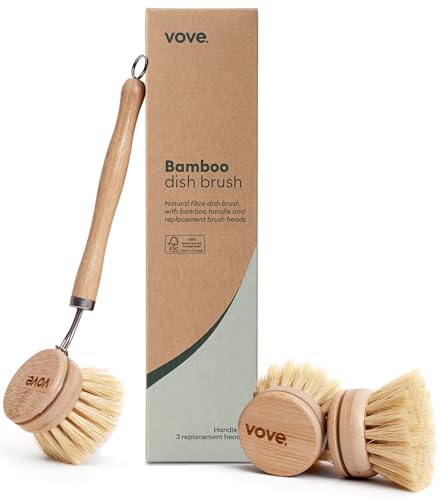
Ditch the toxic products While you're at it, the cleaning products you use in your home end up in the air and in your dust too. Conventional cleaners are some of the most concentrated sources of VOCs and synthetic fragrance in a typical home. "Fragrance" on a label is a catch-all for dozens of undisclosed chemicals, including pthalates. Many are linked to hormone disruption and respiratory irritation. The good news is that switching your cleaning supplies is one of the easiest and cheapest swaps you can make. I wrote about the simple system I actually use, and most of it costs less than your current products. Same goes for personal care: if it smells like something and the label says "fragrance," it's worth reconsidering.
The Medium Wins (This Weekend)
Start a no-shoes policy. This one is free and probably the single easiest thing you can do to reduce what comes into your home. Shoes track in pesticides, heavy metals, and whatever has been on sidewalks and parking lots. Leaving them at the door keeps a huge category of outdoor contamination out entirely. A basket by the front door makes it easy for guests to follow along without it feeling like a big ask. I keep a thrifted basket like this handwoven seagrass basket by our door for shoes and it keeps things contained.
Open your windows — and keep them open safely. When outdoor air quality is decent, ventilation is one of the most effective ways to dilute indoor air. Indoor air can actually be more polluted than outdoor air in many cases because everything inside is off-gassing into an enclosed space. The thing about toddlers is that they are way too good at climbing. The solution I use: window restrictor locks with a cable and key that screw into the frame and limit how far a window can open. They come in white, fit standard double-hung windows, and give you ventilation without the anxiety. I bought a pack and put them on all my upstairs windows.
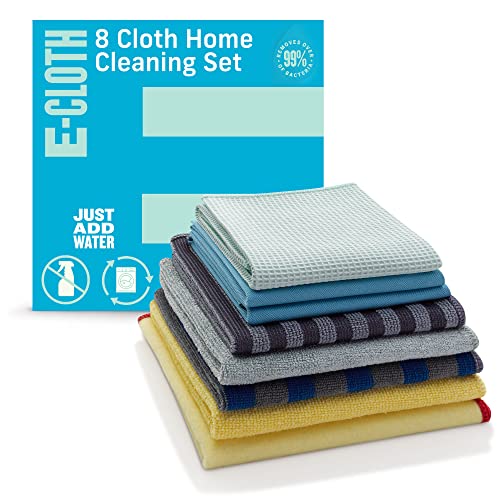
Switch to damp dusting and wet mopping. Dry dusting and dry sweeping mostly just moves dust around and suspends it in the air temporarily before it settles somewhere else. A damp cloth or mop actually picks it up and removes it. This is especially true on hard floors — a good wet mop after vacuuming is genuinely one of the most effective things you can do.
Wash bedding more. Beds are one of the heaviest dust accumulation zones in a house, and we spend a third of our lives in them. Washing sheets weekly and washing pillows and duvet inserts a few times a year makes a real difference. Hot water when the fabric allows. And please, do not use synthetic polyester (read: plastic) sheets, bedding, pillows, or fill in your beds! GOTS or OEKO-TEX certified cotton sheets, down comforters, and down pillows are available for less than you might think. If you have access to IKEA where you live, they have tons of great options.
Declutter. Flat surfaces and rarely-moved objects collect dust. The fewer things sitting around, the less surface area for dust to settle on and the easier it is to actually clean. I am not a minimalist, but I only have so much capacity, so I try to remember that keeping something isn't strictly free. Owning something means managing and stewarding it, so "why not?" is answered with "because I can only manage so much" in my head.
The Small Wins (Today)
Vacuum more often — and put it on a schedule. Play a game where the kids freeze when the vacuums stop. Shove the toys on the floor around with the vacuum if you must, but regular vacuuming with a HEPA vacuum is one of the clearest evidence-backed ways to reduce dust exposure. The focus areas are anywhere kids spend time on the floor and anywhere upholstered furniture is present. We are spoiled with a robot vacuum/mop. I use a Dyson V15 for a thorough manual vacuum weekly (that's the goal anyway) and an iRobot Roomba Combo j7+ on a schedule to vacuum and mop every day that we're out of the house. Scheduling it for when you're away means you come home to clean floors without having to think too much about it and it motivates me to make sure the floor is relatively clear when we leave. It's one of those things where having the right tool made the habit.
Run your air purifier consistently. If you have one, use it in the rooms where people spend the most time, especially bedrooms overnight. If you don't have one yet, the bedroom is the best place to start — you spend 8 hours there every night.
Wash hands before meals and after floor time. You know this one, but sometimes it's easy to let kids slide. In our house, we try our best to enforce handwashing after bathrooming, before meals, and when we get home after we've been out.
Reduce moisture — and don't skimp on heat and AC to do it. Damp environments grow mold and dust mites, which are significant allergen sources in household dust. Ventilate bathrooms, fix leaks promptly, and run a dehumidifier in humid climates if needed. This is also a good reason not to let the house get too warm and humid in summer or too cold and damp in winter. Both heat and air conditioning helps things stay dry which is year-round battle in the pacific northwest. Keeping your home at a consistent, comfortable temperature is genuinely doing double duty for your air quality.
Change your HVAC filter regularly. Speaking of, your furnace and central air system is circulating air through your entire home all day, and the filter is what's catching particles before they get redistributed. A clogged or old filter stops doing its job — and worse, can push accumulated dust and particles back into your air. Change it every quarter (or per instructions) depending on your filter type and how much the climate control has been running, whether you have pets, and how dusty your home runs. It costs a few dollars and takes two minutes and it genuinely matters.
The Bigger Picture
What I find helpful about all of this is that it reframes spring cleaning a little. It's not just about making things look nice, although that's a great side effect. It's about actually reducing the accumulation of junk in your home that you'd rather not have your family breathing and touching every day.
And none of it requires perfection or a complete lifestyle overhaul. You don't need to rip out all your floors this season or feel guilty about your couch. The goal is just to know what's in your home and what your choices are, and in the meantime, to vacuum, mop, open the windows, and leave the shoes at the door.
When you view time spent cleaning not as pointless drudgery, but as a way to help your family stay healthy, it makes it so much more worthwhile. So turn on that audiobook or playlist, go check (and then change) your furnace filter, and happy spring cleaning!
If you're trying to figure out which products in your home are most worth replacing first, that's exactly what our Ask Old Ways tool is built for. You can ask it about specific items — flooring, furniture, cleaning products — and it'll help you find cleaner options without having to already know every concern on your own.
Products Mentioned in This Post
AirDoctor Air Purifiers
- AirDoctor AD1000 — Best for kids' bedrooms and small rooms
- AirDoctor AD3500 — Best for living rooms and larger spaces
Jaspr Air Scrubber
- Jaspr Pro — Commercial-grade, lifetime warranty, direct only (not on Amazon)
Dyson HEPA Vacuum
- Dyson V15 Detect Cordless Vacuum — Whole-machine HEPA filtration, laser dust detection
iRobot Robot Vacuum & Mop
- iRobot Roomba Combo j7+ — Self-emptying, vacuums and mops, lifts mop pad on carpet, schedules via app
Child Safety Window Locks
- Window Restrictor Cable Lock, White — Screws into frame, key-lockable, limits opening, fits standard double-hung windows
- eSynic 4-Pack Window Restrictors — Good value if you have multiple windows
Entryway Shoe Basket
- Americanflat Handwoven Seagrass Belly Basket — Natural materials, foldable, great for an entryway
Organic Cotton Sheets
- Whisper Organics GOTS Certified Sheets — 100% organic cotton, Fair Trade certified, sateen weave
- Threadmill GOTS Certified Percale Sheets — Crisp percale weave, comes in a reusable cotton tote
Down Comforter
- puredown Organic Cotton Down Comforter — 100% organic cotton cover, RDS and OEKO-TEX certified fill, machine washable
- Brooklinen Luxury Down Comforter — 100% natural duck down, 100% cotton sateen shell, baffle box construction
Down Pillows
- Shop down pillows on Amazon → — Look for RDS-certified fill and 100% cotton shell
HVAC Filters
- Shop MERV-rated HVAC filters on Amazon → — MERV 11–13 is a good target for homes with kids or pets
If this article helped you, you can support Old Ways Today at no extra cost by starting your next Amazon order through our link.
Shop on Amazon & Support UsProducts We Recommend



Enjoying this article? Get more like it in your inbox.
What Do You Think?
Loading comments...