
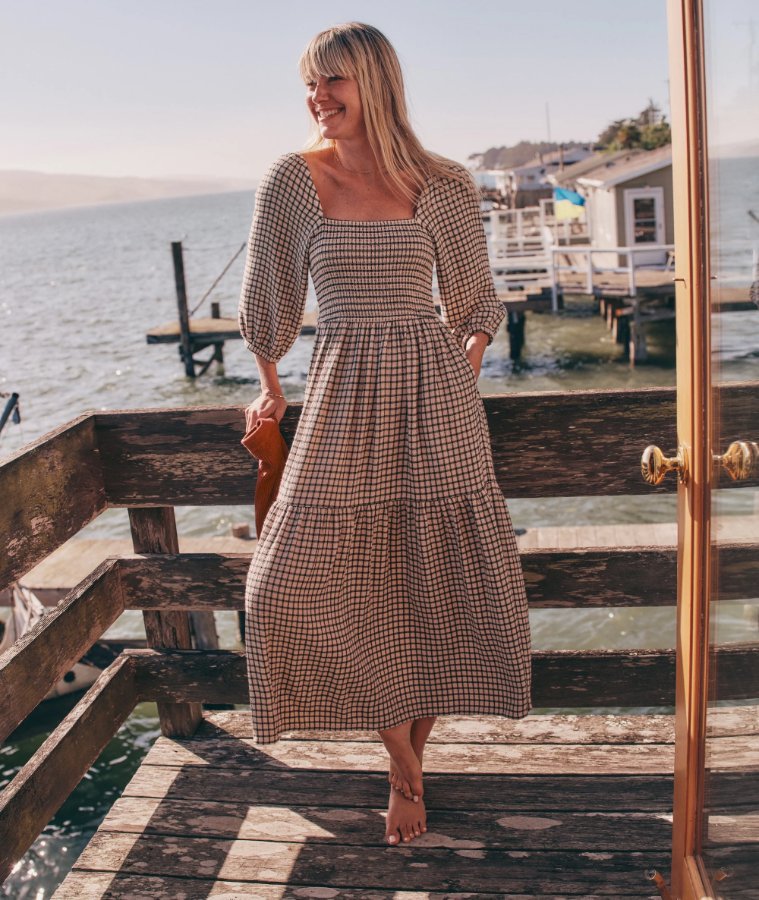
Committing to a Natural Fibers Wardrobe: Brands I Love
I have committed to not buying another synthetic clothing ever again. I thrift a lot of clothes and I have a complete wardrobe already, so I still have a few things I am keeping that aren't natural fibers, but I decided if I need to replace something, I'm gonna find a natural fibers alternative.
I didn't fully appreciate how much fabric matters until I started wearing cotton PJs. Then one night, I wore an old pair of polyester pajamas and couldn't sleep. We had been gradually switching over to natural fibers like cotton, linen, down, and wool, and somewhere in that process, polyester started feeling like what it actually is: like wearing plastic. Polyester is made from PET plastic—the same thing the water and soda bottles are made from. I donated most of my polyester clothes and have never looked back. Cotton pajamas forever.
If you've had a similar realization, or if you're curious whether the fabric switch is worth it, here's my honest take on what I buy, why it matters, and where I've landed on all the tricky categories (looking at you, bras).
Why Natural Fibers?
The short answer: they just behave better.
Cotton doesn't pill the way polyester does. You know that fuzzy, pilled look that settles in after 20 washes? That's synthetic fibers breaking down. Cotton gets softer with washing instead. It also comes out of the laundry cleaner—natural fibers release odors and grime more easily than synthetics, which trap them. And breathability isn't a marketing word when it comes to cotton and wool; those fibers genuinely regulate temperature in a way that polyester can't, because polyester was invented to hold things in (think: insulation, plastic bottles).
There's also the chemical question. Synthetic fabrics can off-gas chemicals from the manufacturing process, and they shed microplastics with every wash. We're wearing these things directly on our skin, often all day, so it's worth paying attention to what they're made of.
None of this means you have to be perfect. I'm not. I still have a few synthetic items in my closet and I'm not losing sleep over them (unlike the polyester pajamas). But when I'm replacing something, natural fiber is the standard I'm shopping toward.
My Favorite Brands
Marine Layer
Marine Layer is where I go when I want something that feels good to wear and doesn't look like I'm trying too hard. That west coast casual thing—relaxed, soft, a little laid-back—is exactly their vibe. Their signature fabric is a MicroModal blend made from beechwood pulp, which sounds strange but wears beautifully. It's genuinely one of the softest things I own.
A note of honesty here: not everything Marine Layer makes is a natural fiber. They use recycled synthetics in some pieces, so you do have to read labels. I stick to their MicroModal tees, dresses, and tops. They have a lot of cotton and linen options too. I love their cotton dresses! Always check the fabric tag before buying.
Marine Layer is available on Amazon as well.
Faherty
Faherty is also west coast-leaning in feel—beachy, earthy, the kind of clothes you wear on a hike and then to dinner. I reach for Faherty for cotton sweaters, button-downs, and anything I want to have around for a long time. Their stuff is well-made and holds up beautifully.
They're also available on Amazon, which I appreciate for easy reorders.
H&M
This one might surprise you, but hear me out. H&M is not a brand I'd send you to for everything—plenty of their inventory is synthetic—but their basics section is genuinely worth knowing about. Tanks, tees, and lounge pieces in 100% cotton show up consistently in their lineup, and the prices are hard to argue with. I've found soft cotton ribbed tanks, simple tees, and comfortable cotton lounge sets that hold up well and wash beautifully. The key is to filter by material and ignore everything else. Look for "100% cotton" on the label and you're in good shape. It's one of the more accessible entry points if you're just starting to make the switch and don't want to spend a lot while you figure out your preferences.
Basics, Underwear, and Socks: Pact
If Marine Layer and Faherty are the fun picks, Pact is the workhorse. GOTS-certified organic cotton, Fair Trade certified factories, and actually affordable. This is where I buy leggings, joggers, underwear, and socks — basically everything I need in quantity and wear constantly.
Their Go-To 7/8 Leggings are genuinely good — 92% organic cotton and 8% elastane (more on elastane in a moment). I wear them constantly. The Airplane Jogger is another favorite for a more relaxed fit.
Their underwear is something I've been buying for a while now and recommend to everyone. Soft, holds its shape, no weird dyes. They make styles for men and women both.
For socks, I also really like Maggie's Organics. GOTS-certified organic cotton and wool, Fair Trade, and made in North America. They have options ranging from thin everyday socks to thicker hiking styles, and the quality is noticeably better than conventional socks. But if you want a one-stop shop, Pact does socks too and they're great.
If you do nothing else from this post, swapping your everyday underwear and socks to natural fiber is the lowest-effort, highest-contact swap you can make. You're wearing these things directly on skin all day. It's worth it.
What You Need to Know About Wool
When I started looking for a good wool sweater, I quickly learned that not all wool is the same — and the difference comes down to a process called superwashing.
Superwash wool has been chemically treated to make it machine-washable. Sounds great, until you find out the treatment involves stripping the wool's natural scales and coating the fibers in plastic resin. Those scales are actually part of what makes wool self-cleaning and naturally resistant to odors and stains. Superwash also tends to stretch out more and, somewhat counterintuitively, stains worse than untreated wool. You're essentially paying for a wool that behaves more like synthetic.
Non-superwash wool is wool closer to its natural state. More durable over time, more resistant to staining, stays looking better longer. The tradeoff is care. You'll need to handwash it or use a gentle/delicate cycle in cold water and lay it flat to dry. That extra step is genuinely worth it for a sweater you want to have and wear for years. And the good news is you can tell superwash wool from unadulterated wool very easily — if the care instructions say the piece can go in the washer and dryer, it is superwash wool. Wool cannot tumble dry even on low.
For a classic wool sweater built to last, Aran Woollen Mills is a beautiful option. Traditional Irish cable-knit construction, 100% wool, made in Ireland since 1965. Their pieces have real weight and character to them — the kind of sweater you keep for a lifetime. You can find them on Amazon or directly through their site.
A Note on Elastane (Spandex)
You'll notice that even in "natural fiber" clothing, many items have 5–10% elastane or spandex listed on the tag. This trips people up, so here's the honest breakdown.
Elastane is a synthetic fiber added in small amounts to give fabric stretch and recovery — meaning it bounces back to its original shape after you move. Pure cotton without any stretch tends to bag out at the knees, go shapeless at the waist, or otherwise stop fitting well pretty quickly. That 5–10% elastane is what makes a cotton legging actually work as a legging. (Quick note: elastane, spandex, and Lycra are all the same thing — spandex is the North American term, elastane is the European term, and Lycra is a brand name, like Kleenex is for tissues. You'll see all three on clothing labels.)
Is it ideal? No. If you're trying to go fully synthetic-free, you can seek out items with no elastane — some brands offer them. But for everyday basics where you need the item to move with you and hold its shape, a small percentage of elastane in a predominantly natural fiber is a reasonable tradeoff, especially if you're looking for something form-fitting and stretchy like leggings, socks, and some jeans. It's still a far better option than something that's 100% spandex or synthetic.
For context, truly elastane-free options exist (Rawganique makes them), but the fit is different and not everyone loves it. Your call!
Washing and Care: The "Dry Clean Only" Loophole
One thing that stops people from buying natural fiber clothing is care instructions. Wool especially tends to come with scary labels: hand wash only, dry clean only, lay flat to dry.
Dry clean only is the one I want to address specifically, because dry cleaning chemicals are not great. Most conventional dry cleaners use perchloroethylene (PERC), which is a solvent linked to health issues and environmental contamination.
Here's what I do instead, and your mileage may vary: I wash "dry clean only" wool and delicate items on my machine's delicate cycle in cold water with low spin, then line dry them flat. I have never had a problem doing this. The key is cold water, gentle cycle, low spin, and air drying — never the dryer. Heat is what destroys wool and causes it to shrink.
Wool is anti-microbial and odor-resistant, so it doesn't need to be washed nearly as often. It airs out really well, so in between washes, try hanging your item in the window! You may rarely have to wash or dry clean it anyway! And for sweat, try putting a little baking soda on the underarms overnight. It's essentially non-toxic dry cleaning.
Bras: The Hard One
I'll be honest: I haven't solved this one yet.
Bras are difficult because the design requirements — support, structure, underwires, adjustable straps, a wide range of sizing — almost always push manufacturers toward synthetic fabrics. Most conventional bras are nylon, polyester, or a blend, and even many "sustainable" options swap in recycled synthetics rather than natural fibers.
That said, The Very Good Bra is one I've had my eye on and genuinely looks promising. They make bras entirely from natural materials — organic cotton, no spandex, no synthetics. They're an Australian brand, so shipping is worth factoring in, but the product makes it look like they're doing everything right.
For those who want more structure, Rawganique offers organic cotton and organic merino wool bras made in the USA and Europe that I'm excited to try!
I'll report back once I've actually tried one of these. In the meantime, if you've found a natural fiber bra that works well for you, I'd genuinely love to know about it in the comments.
Switching to natural fibers doesn't have to happen all at once. Start with what touches your skin most — underwear, socks, your everyday t-shirt. Then work outward from there at whatever pace makes sense for your budget and your closet. Thrifting is also a great way to get into natural fiber clothing without the premium price tag; wool and cotton hold up far better secondhand than synthetics do, so you may be surprised what you find!
Comment to share your favorite natural fibers clothing brands with me!
If this article helped you, you can support Old Ways Today at no extra cost by starting your next Amazon order through our link.
Shop on Amazon & Support UsProducts We Recommend



Enjoying this article? Get more like it in your inbox.

What Do You Think?
Loading comments...